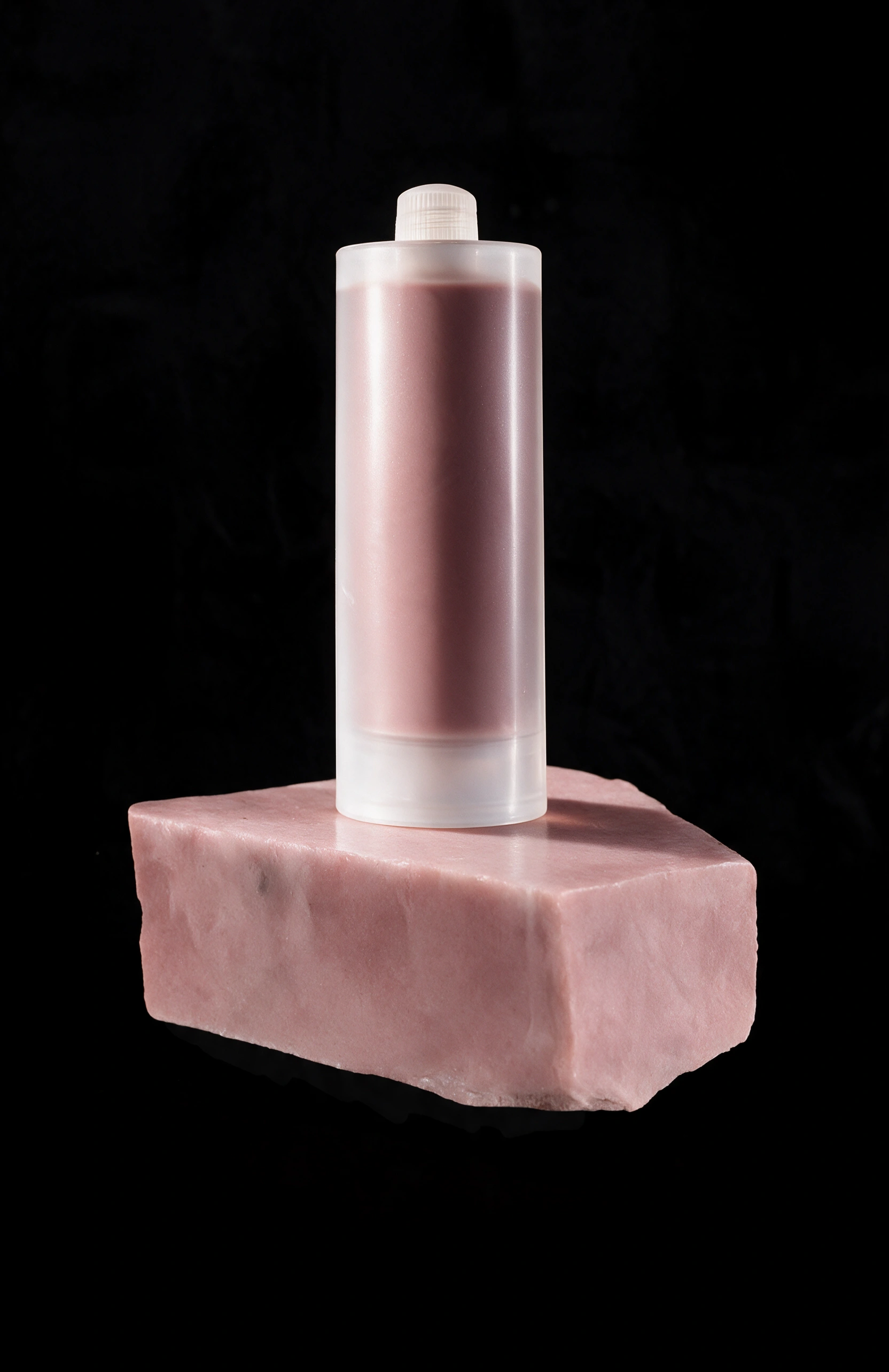
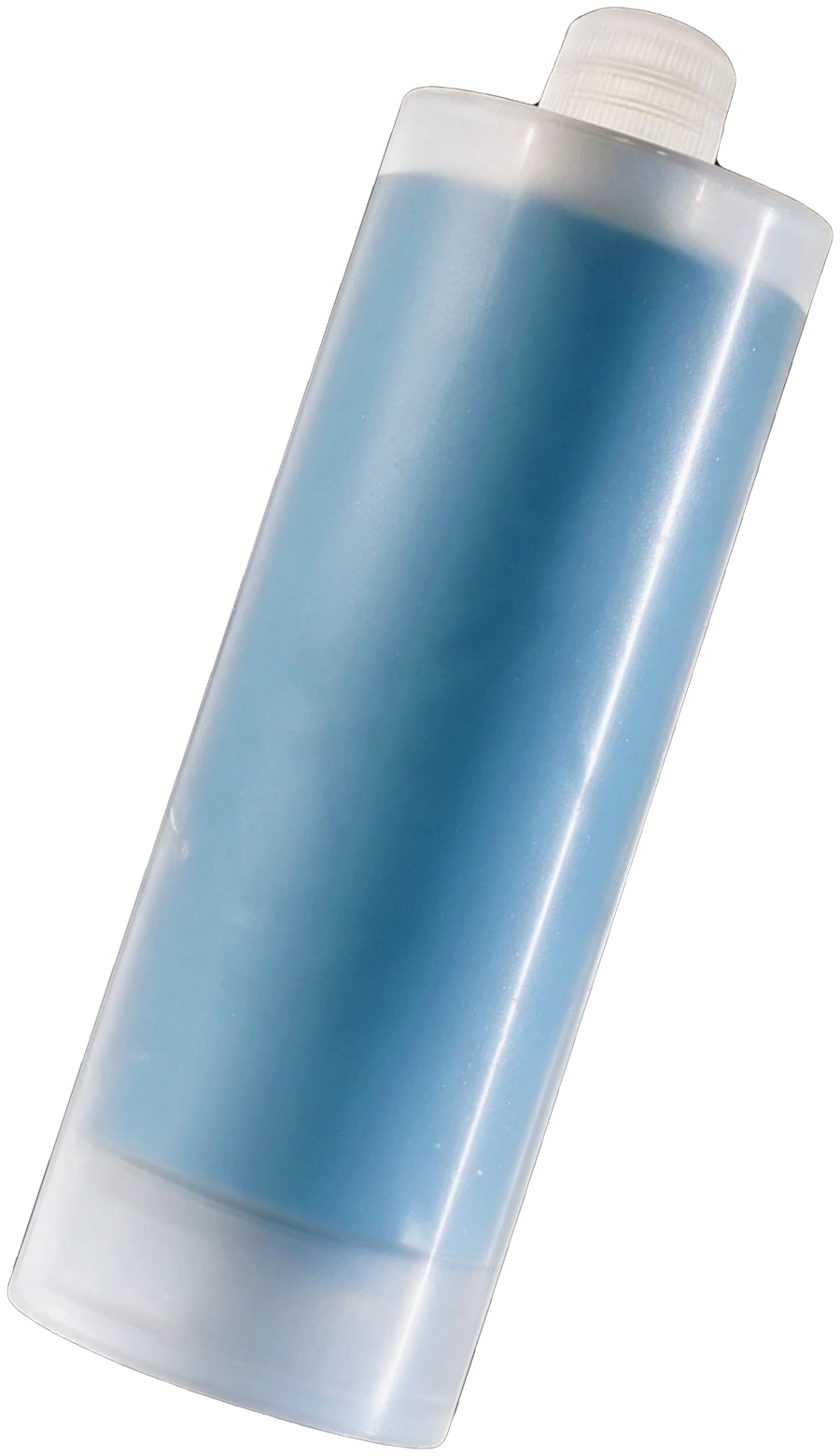
Sfumato: The 500-Year-Old Idea Behind What We Do
If anyone ever asks me who I look up to, Leonardo da Vinci is one of the first names that comes to mind. Not because I compare myself to him — that would be absurd. But because the way he thought about his work is something I come back to constantly.
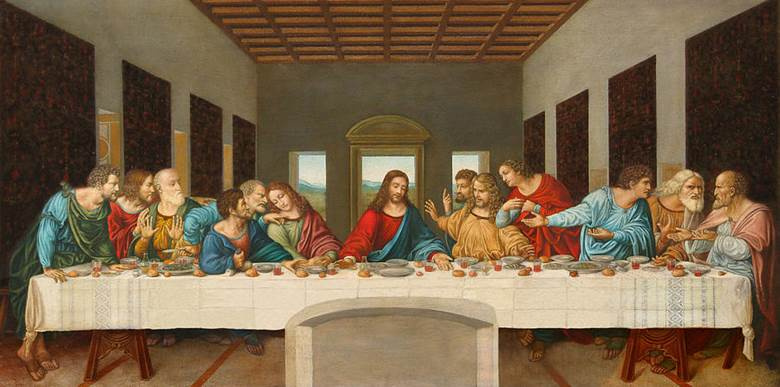
The refusal to accept that a technical limitation should dictate the final result. The obsession with how things actually appear, not how convention says they should.
Da Vinci had a problem with edges. Not structural edges. Not technical edges. Perceptual edges — the places where one thing ends and another begins, and the eye registers a boundary that doesn't exist in nature.
Plaster, linen, patience
His solution was sfumato. The word comes from the Italian sfumare — to evaporate, to vanish like smoke. Da Vinci described it himself: "without lines or borders, in the manner of smoke."
He was talking about painting. About applying layer upon layer of translucent glaze, so thin that the transitions between light and shadow became imperceptible. No hard contours. No visible seams between one tone and the next. Just a continuous surface that the eye could travel across without interruption.
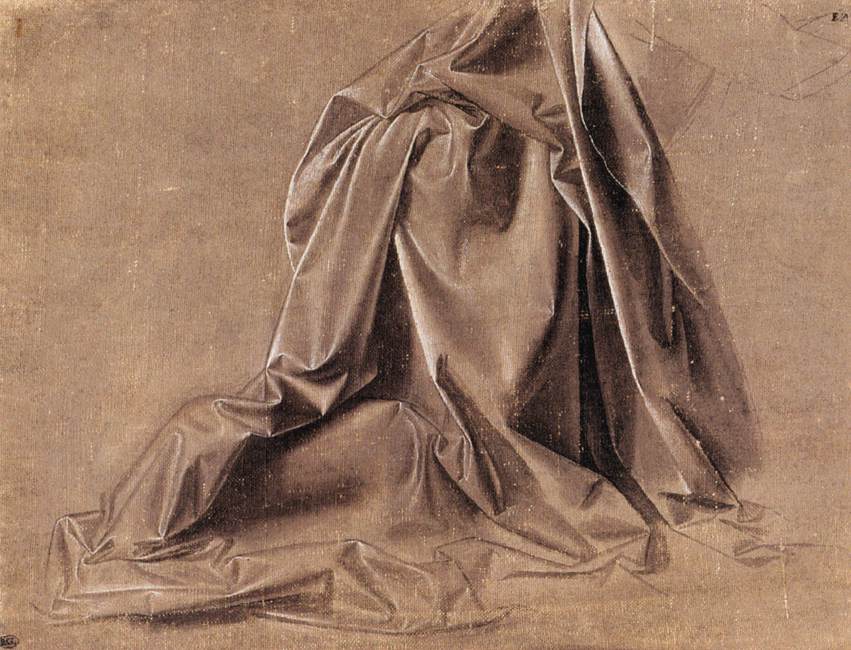
He spent years perfecting it. Before the Mona Lisa, before the commissions and the fame, he sat in Verrocchio's workshop making drapery studies. The method was simple and strange: soak linen in diluted plaster, drape it over a clay figure, and let it harden. Then study what the light does. How shadow deepens in a crease. How a fold catches brightness on one side and disappears into darkness on the other.
He painted these studies in black and white on fine linen, building tone layer by layer until the surface seemed to glow from within.
That patience carried into everything he touched. Stand in front of the Mona Lisa — really look — and you won't find a single hard edge on her face.
The shadow beneath her cheekbone doesn't start. It arrives.
The corner of her mouth doesn't end. It dissolves.
Da Vinci understood something fundamental: the human eye doesn't see lines.
It sees gradients. Force a hard boundary into a surface that should read as continuous, and the eye catches on it. The illusion breaks.
That, in essence, is the problem we work on every day.
Close enough
A stone countertop has no lines. A tile wall has no borders — until someone fills the transition with a material that the eye was never supposed to notice. Standard silicone introduces exactly what da Vinci spent his career eliminating: a visible boundary where none should exist. A bright line in a recess where shadow should gather. A flat, uniform surface next to a material full of depth and movement.
The industry calls this "colour matching." Match the swatch. Pick the closest RAL code. Close enough.
Da Vinci would have found this absurd. He didn't match colours — he studied how the eye actually perceives transitions between tones, how light behaves differently in a recess than on a surface, how shadow has its own depth and warmth that a flat colour can never replicate.
That is the difference between matching and integrating.
500 years later
At FugeMads, we don't work from colour codes. We work from physical materials — your stone, your tile, your paint, your lacquer. And we don't ask what colour the transition should be. We ask how it should behave. How it should read at a distance. How light should fall into it. Whether it should absorb or recede or carry a trace of the material's own texture.
Sometimes that means a clean, precise tone where the transition simply ceases to exist. Sometimes it means introducing depth, so the silicone reads as shadow rather than material — because a recess is not a surface, and it shouldn't look like one.
And sometimes it means letting the silicone carry something of the stone itself, so the transition doesn't just match the colour but participates in the material's own visual language.
Different situations. One principle: the transition should not announce itself.
The technique exists to serve the material
Da Vinci didn't invent sfumato because he wanted softer paintings. He invented it because he refused to accept that a technical limitation — the visible brushstroke, the hard edge — should dictate the final result. The technique existed to serve the material, not the other way around.
We think about sealant the same way. Silicone is a technical necessity. Movement happens. Materials expand, contract, settle. The transition needs to accommodate that.
But the fact that it's technically necessary doesn't mean it should be visually present.
The best work disappears. Da Vinci knew this 500 years ago. We build on the same conviction — that the last detail deserves the same rigour as the first, and that a surface is only as coherent as its weakest transition.
Designed to disappear. It's not a slogan. It's sfumato, applied to silicone.